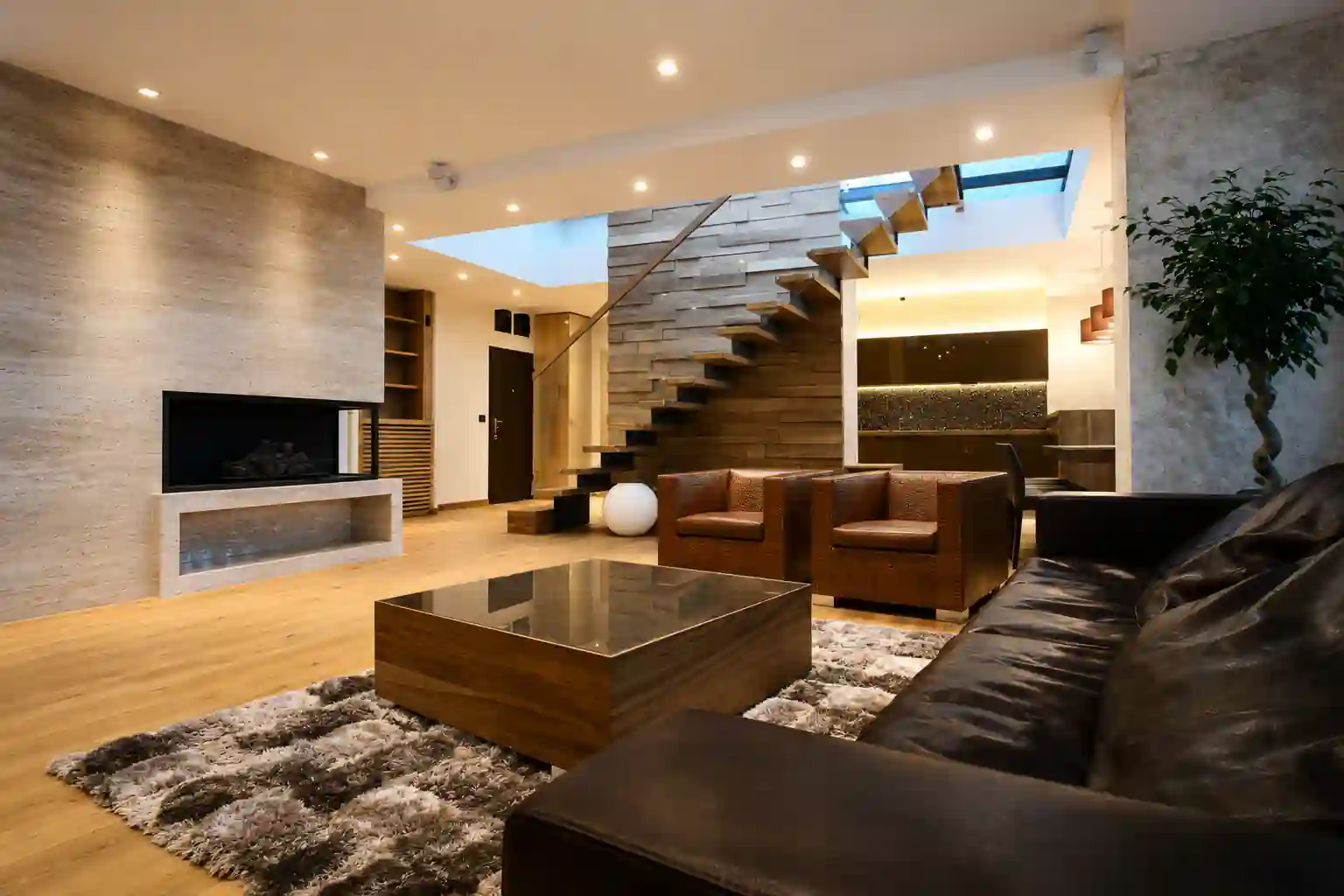
Do’s and Donâts of Building a Staircase as Per Vastu
@font-face {
font-family: ‘Heading2Font’;
src: url(‘ format(‘opentype’);
}
@font-face {
font-family: ‘NOTOSANSREGULAR’;
src: url(‘ format(‘truetype’);
}
body {
font-size: 15px !important;
font-family: ‘NOTOSANSREGULAR’;
line-height: 1.7;
}
h2 {
font-family: ‘Heading2Font’;
font-size: 23px;
line-height: 32px;
margin-bottom: 12px;
}
h3 {
font-family: ‘Heading2Font’;
font-size: 20px;
line-height: 28px;
margin-bottom: 10px;
}
.toc-container {
border: 1px solid #e5e5e5;
padding: 20px;
border-radius: 12px;
background: #fafafa;
margin: 20px 0;
}
Staircase placement is a crucial Vastu consideration because it becomes a permanent structural element once built. According to Vastu, the south-west is the preferred direction for staircases, with south, west, and north-west as acceptable alternatives. Staircases should be avoided in the north-east, centre, north, and east zones, as they may disturb prosperity, health, and energy flow. Key rules include clockwise ascent, odd-numbered steps, clutter-free under-stair storage, and avoiding direct alignment with the main door.
A staircase is one of the most structurally permanent elements in a home. Once built, it almost never moves. That is precisely why following staircase guidelines as per Vastu matters most at the planning stage, before anything is cast in concrete or steel.
Get it right early, and the staircase works with the home’s energy. Get it wrong, and the structural fix is expensive, sometimes impossible, and the Vastu dosha stays for the lifetime of the building.
Why Does the Staircase Placement Matter in Vastu?
In Vastu Shastra, a staircase represents the movement of energy between floors. Its direction, position, and design determine whether that movement supports or disrupts the home’s overall energy balance.
A poorly placed staircase can cut through zones that govern prosperity, health, or spiritual energy. Staircase guidelines as per Vastu exist specifically to prevent this, ensuring that vertical movement through the home does not compromise the energetic integrity of the zones it passes through.
What’s the Ideal Direction for Staircase Placement as Per Vastu?
Staircase direction as per Vastu clearly favours the southern, western, and south-western zones of the home:
- South-west is the most recommended placement. It is the zone of earth energy and stability, capable of absorbing the structural weight of a staircase without energetic disruption. A staircase location, as per Vastu, in the south-west is considered particularly favourable for independent homes and duplexes
- South and west are both acceptable alternatives. These directions are associated with outgoing energy, which aligns with the function of a staircase as a transitional element
- North-west is a secondary option, used when south or west placement is not structurally feasible
What are the Zones That Should be Strictly Avoided?
Staircase position as per Vastu becomes a significant concern when the structure is placed in any of these zones:
- North-east is the most problematic placement, as it is the Ishanya corner, governing spiritual energy and prosperity. A staircase here is considered one of the more serious Vastu doshas and is associated with financial instability and health issues
- A staircase through the centre of the home (Brahmasthan) disrupts the energetic heart of the home entirely. The Brahmasthan should remain open and unobstructed
- The north is associated with incoming prosperity and opportunities. A staircase in the north blocks this directional benefit
- East is the zone of energy and morning light. Structural weight here is considered unfavourable in staircase guidelines as per Vastu
What are Some Key Design Rules That Every Homeowner Should Know?

Beyond placement, several other factors are considered when planning Vastu for staircases inside the house.
-
Direction of ascent
Many homeowners wonder if a spiral staircase should be clockwise or anticlockwise. The answer is that it should turn clockwise as it ascends, i.e., someone climbing the stairs should always turn left. An anticlockwise staircase is considered to move against the natural flow of positive energy.
-
Number of steps
According to Vastu staircase guidelines, your home should have an odd number of steps. The logic is straightforward: when you begin climbing with the right foot, you should also land on the right foot at the top. An odd number of steps ensures this. Commonly recommended totals are 9, 11, 15, 17, 21, and so on.
-
Under the staircase
The space beneath a staircase should not be used as a toilet, prayer room, or kitchen. Storage is acceptable, provided it is organised and clean. Dark, cluttered under-stair spaces are considered particularly problematic for a staircase as per Vastu.
-
The staircase should not begin or end at the main door
The first step should not be directly visible from the entrance, and the staircase should not face the main door. This is a widely consistent guideline across frameworks regarding staircase direction as per Vastu.
What are Some Ways to Improve the Staircase Layout for Existing Homes?
If you are living with a staircase that already exists, possibly in a less-than-ideal position, remedies for staircases as per Vastu also exist that work at the level of correction rather than reconstruction.
- For a staircase in the north-east, place a Vastu pyramid on the wall adjacent to the staircase and keep the area exceptionally clean and well-lit
- If the staircase faces the main door, use a decorative screen, a large plant, or a piece of art to break the direct sightline
- Keep the space under the staircase organised; clutter here amplifies any existing Vastu dosha
- Ensure every step is in good condition, as a broken or uneven step is considered inauspicious for staircases as per Vastu
- Warm lighting at each landing counteracts the heavy, descending energy that a poorly placed staircase can create
How Bonito Designs Integrates Vastu into Staircase Planning
Having a staircase as per Vastu is a decision that intersects structural engineering, interior design, and directional principles simultaneously. Bonito Designs approaches this intersection practically, working with the home’s existing structure and layout to find the best possible outcome within real constraints.
Our Life Design philosophy means Vastu is never applied as a rigid checklist that ignores how the family uses the space. Determining the best place for a staircase according to Vastu principles needs to happen before construction begins, not after the slab is poured and the walls are up.
If you need a design team that understands how to balance Vastu principles with the realities of your family’s lifestyle, book a consultation with Bonito Designs today.
PakarPBN
A Private Blog Network (PBN) is a collection of websites that are controlled by a single individual or organization and used primarily to build backlinks to a “money site” in order to influence its ranking in search engines such as Google. The core idea behind a PBN is based on the importance of backlinks in Google’s ranking algorithm. Since Google views backlinks as signals of authority and trust, some website owners attempt to artificially create these signals through a controlled network of sites.
In a typical PBN setup, the owner acquires expired or aged domains that already have existing authority, backlinks, and history. These domains are rebuilt with new content and hosted separately, often using different IP addresses, hosting providers, themes, and ownership details to make them appear unrelated. Within the content published on these sites, links are strategically placed that point to the main website the owner wants to rank higher. By doing this, the owner attempts to pass link equity (also known as “link juice”) from the PBN sites to the target website.
The purpose of a PBN is to give the impression that the target website is naturally earning links from multiple independent sources. If done effectively, this can temporarily improve keyword rankings, increase organic visibility, and drive more traffic from search results.
Related Posts
10 Kitchen Lighting Ideas to Transform Your Cooking Space
10 Best Bedroom Sofa Design Ideas